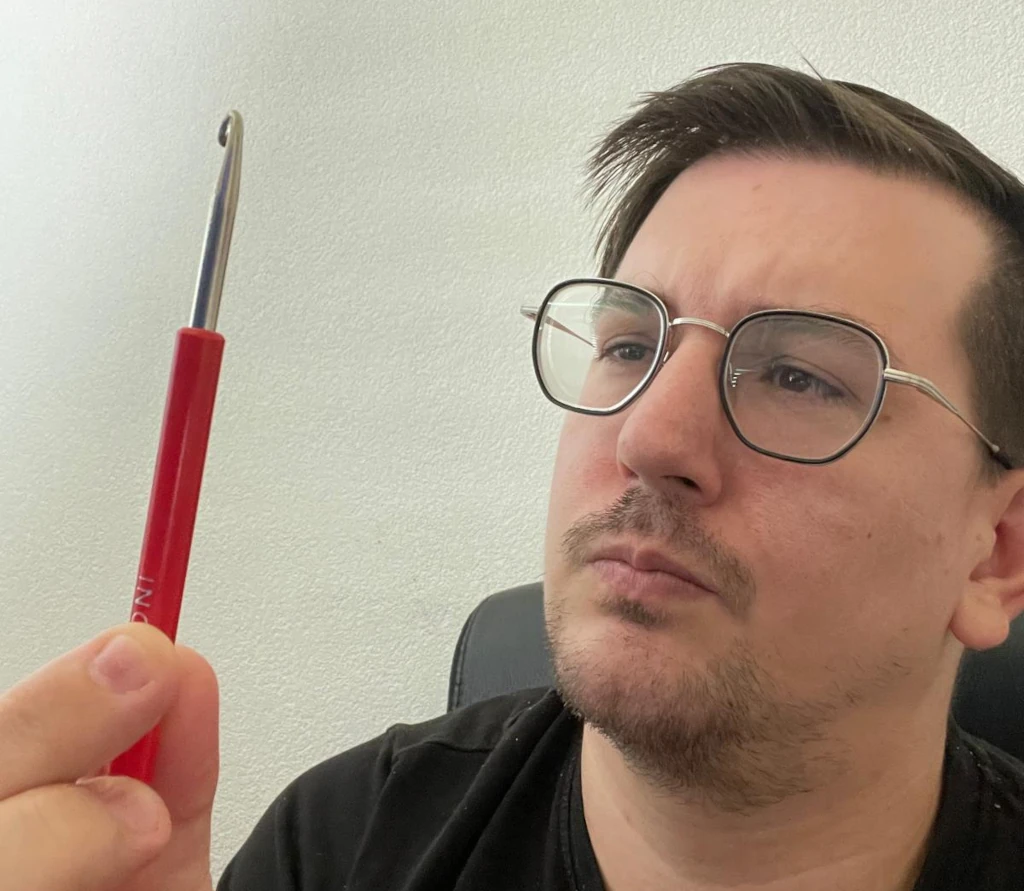
In December, I picked up a crochet hook for the first time. My wife crochets, but she has been rusty for a long time. One day I just decided to try. No particular reason. Curiosity and motivation from my wife, mostly.
That was the beginning of something I did not see coming.
I recently broke my foot, which keeps me home more than usual. I will write about that separately. What it means for crochet is simple: I have more time, and I am using it.
Starting from zero
The first thing I made was a simple chain. Then a few rows of single crochet. Humble stuff. Nothing to look at. And for a while, that was all I could see: repetition. The same stitch, over and over. I could not picture how anyone built something real out of it.
That confusion stayed with me for a while. I kept practicing, but I had no framework for how things came together. Then I discovered that crochet has patterns. Written instructions. A notation system. That was the turning point.
Here’s an example pattern from a Market Bag I made.
Round 5: CH 7 (counts as DC+CH 4), skip 3 DC, 1 SC in 4th DC of shell, CH 4, skip 3 DC, 1 DC in SC, CH 4, skip 3 DC, 1 SC in 4th DC of shell, CH 4, skip 3 DC repeat to the end, join with a SLST to the 3rd CH of CH 7 (6 DC, 6 SC, 12 CH 4 SP)
Suddenly everything made sense. Every stitch has an abbreviation, every pattern is a sequence of instructions, and every diagram is a visual map of the whole thing. If you can read code, you can read a crochet pattern. It’s like learning a new programming language. The structure is genuinely similar: you follow a set of rules, you track your state (your stitch count, your rows, your rounds), and you produce an output.
For someone with an analytical mind like us, this is very natural.
Math is everywhere
To do more than the basics, you need math. Not complex math, but precise math.
When you resize a pattern, you need to understand the stitch ratio. When you crochet in the round, you need to know how many increases to add per round to keep the work flat. When you design something from scratch, you are doing geometry. A granny square is a study in symmetry. An amigurumi body is a sphere, built stitch by stitch with increasing and decreasing rounds.
I started seeing the math before I even started crocheting the piece. The pattern becomes almost a formula. Input: yarn weight, hook size, stitch count. Output: a specific shape with specific dimensions.
It’s pure analytical work.
Reading diagrams
Some crochet patterns come with diagrams, which are visual maps of every stitch, its position, its direction. Not all of them do, unfortunately, because the tooling for creating good diagrams is still surprisingly lacking. When a diagram is available, learning to read it is a significant skill jump.
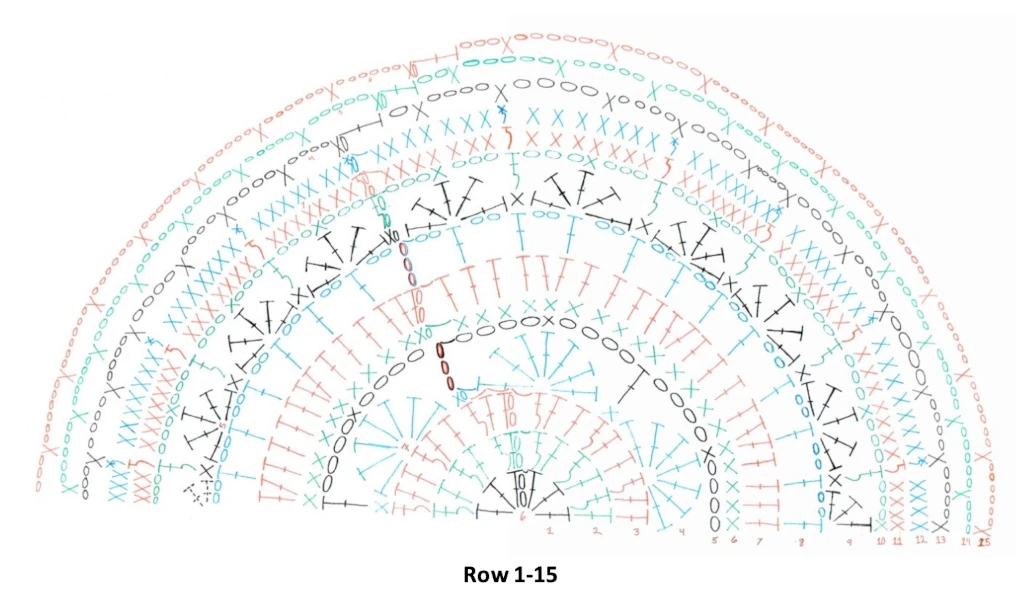
Once I could read a diagram, I could look at a pattern and understand its full structure before picking up the hook. I could spot errors, modify sections, adapt to a different yarn weight or size without relying blindly on someone else’s adjustments.
This is the same skill set as reading documentation or reading someone else’s code. You build a mental model of the structure, and then you can work with it rather than just follow it.
The lack of good diagramming software is something I am actually doing something about. Not only is the current software awful, but some designers write the diagrams by hand! But that is a story for another post.
What I have made so far
What started with one ball of yarn is now a wooden basket with over fifty balls waiting to become something. I have a list of projects. Some are planned, some are just ideas. And to be quite fair, it has become an addiction. When I see a colorful and smooth ball of yarn, I buy it. I will eventually find something to do with it.
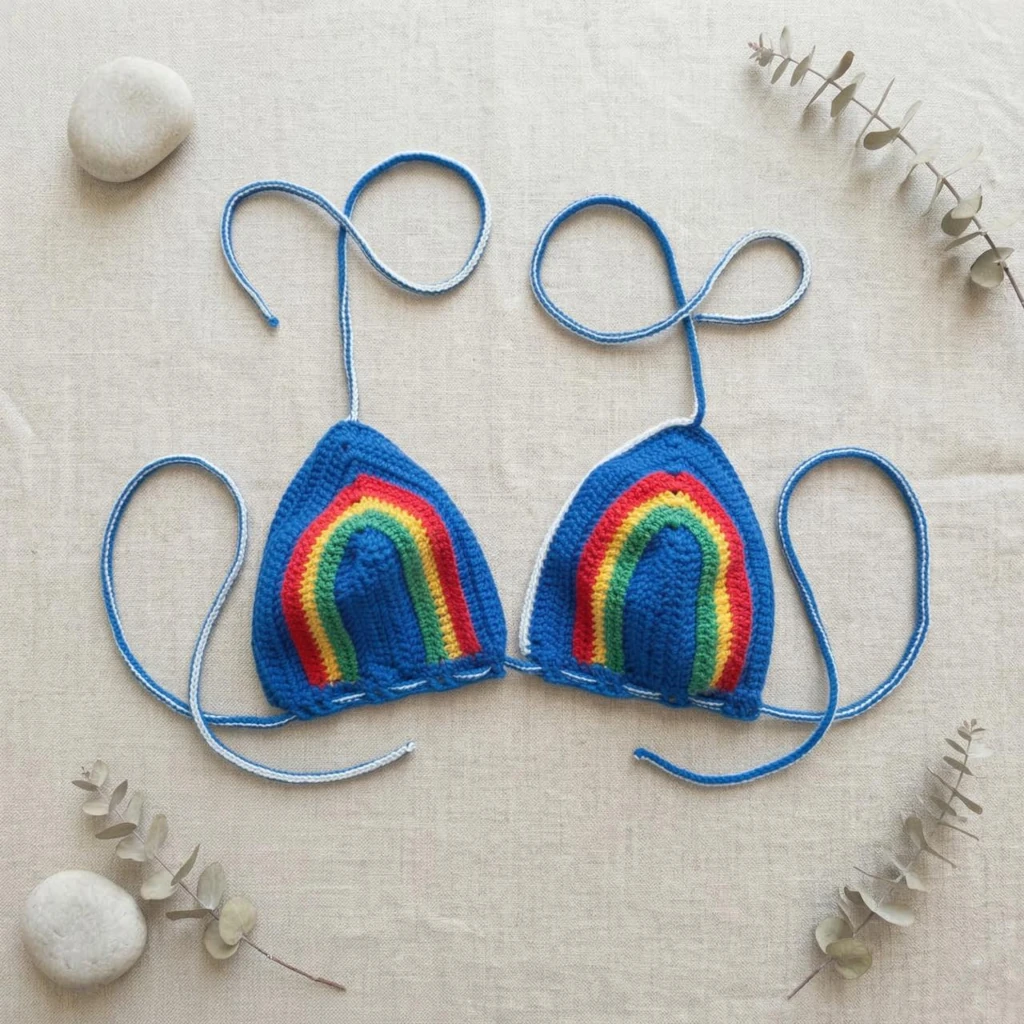
For my wife I made a bikini and a cropped top. She was stunned. She genuinely did not expect me to pick it up this fast, let alone produce wearable things. That reaction was one of the most satisfying things I have experienced in a long time.
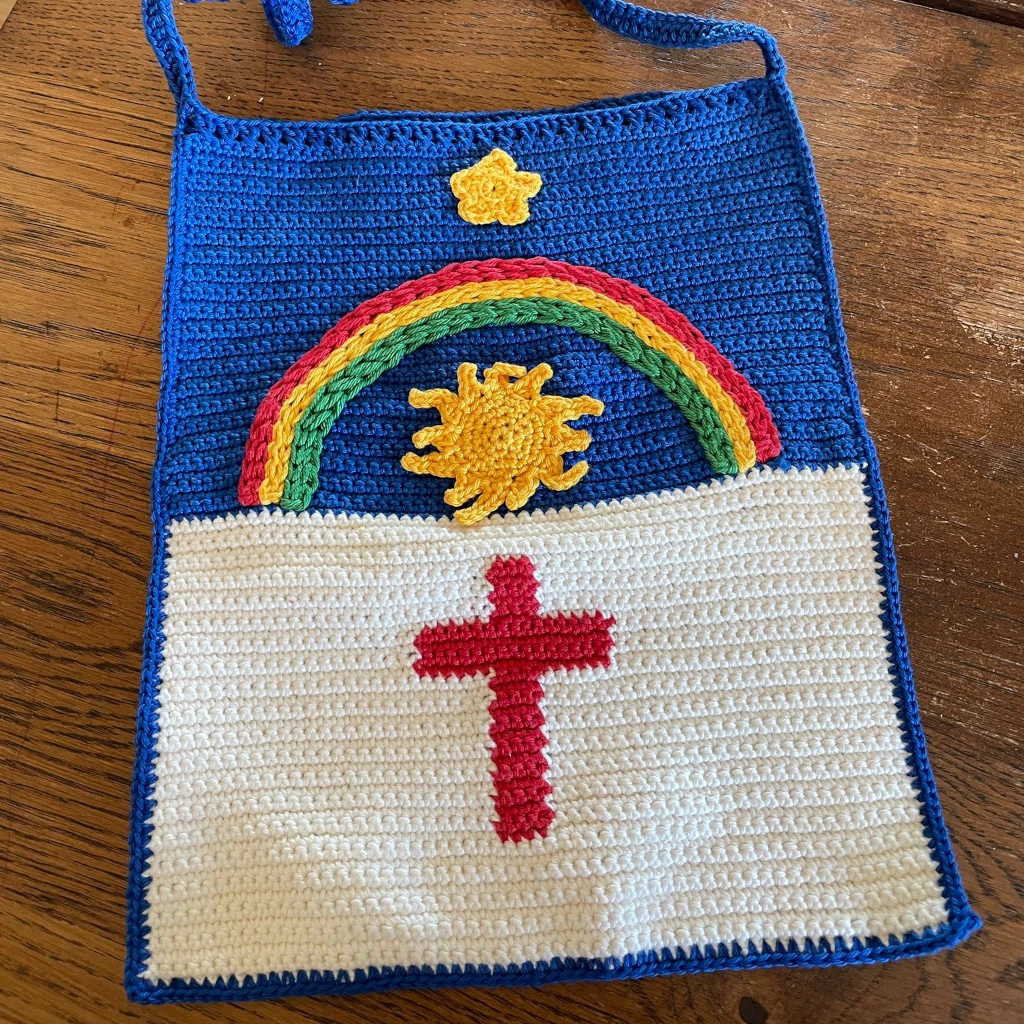
For a friend I made a bikini and a purse in the colors of the flag of Pernambuco, a state in Brazil. Strong blue and white, with a rainbow in the middle. It came out beautifully and she loved it.
Now I am diving into amigurumis, which are crocheted stuffed figures. Animals, characters, little creatures. They are pure joy to make. The construction logic is fascinating: you build each part separately, following rounds that increase and decrease to shape a 3D form, and then you assemble the whole thing.
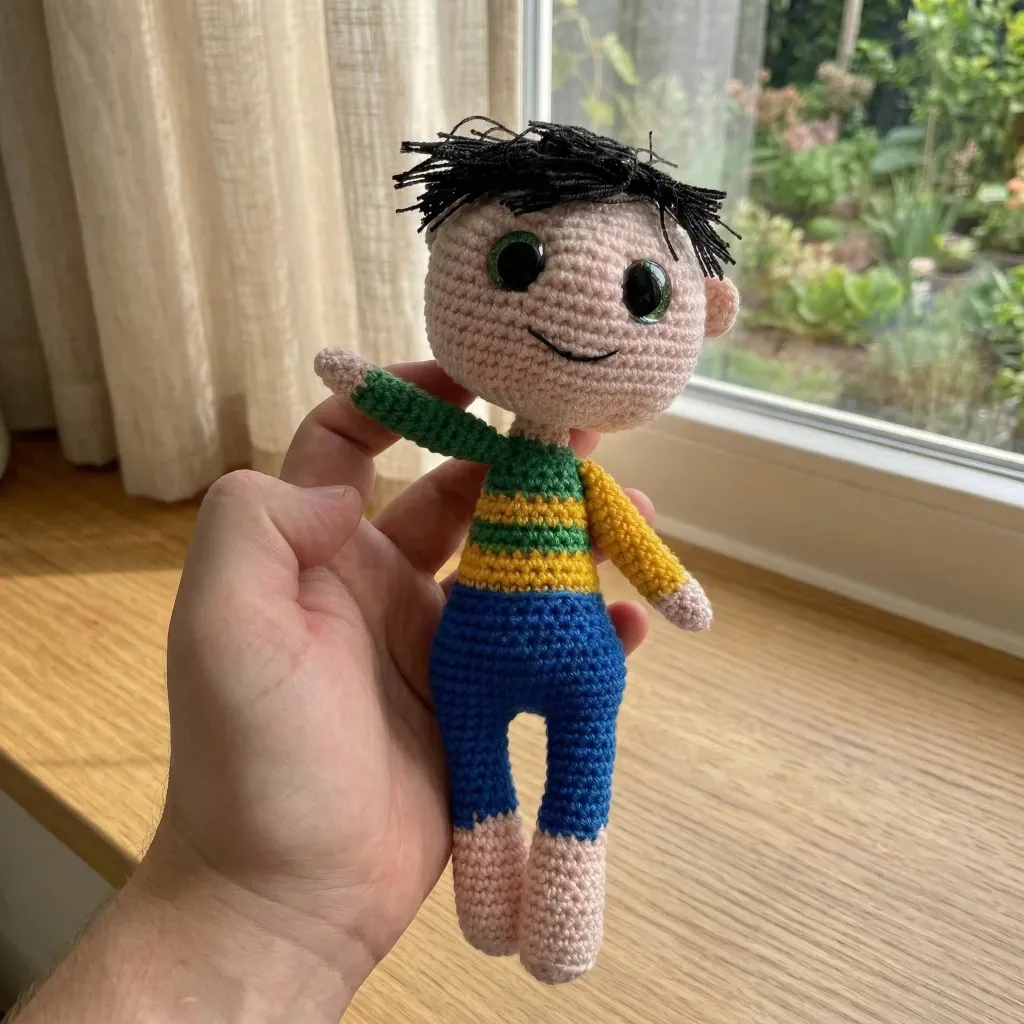
Some friends are already placing orders. I did not expect that either.
The unexpected benefit
Beyond the intellectual side, crochet does something that most things in my life do not: it forces me to be present.
When I am working on a complex pattern, I cannot think about work, or problems, or plans. I have to count. I have to watch my tension. I have to track where I am in the round. My mind has one job, and everything else goes quiet.
For a brain that is usually running in five directions at once, that quiet is genuinely rare and genuinely valuable.
Other than that, finishing a crochet project gives me an amazing sense of accomplishment. It’s something I’ve done from start to finish that serves a purpose. Few things are as rewarding as this.
A broken foot is not a great situation, but it has given me more hours at home, and I am spending a good number of them with a hook in my hand. Worse ways to pass the time.
Stay hydrated, and maybe pick up a hook. You might surprise yourself.